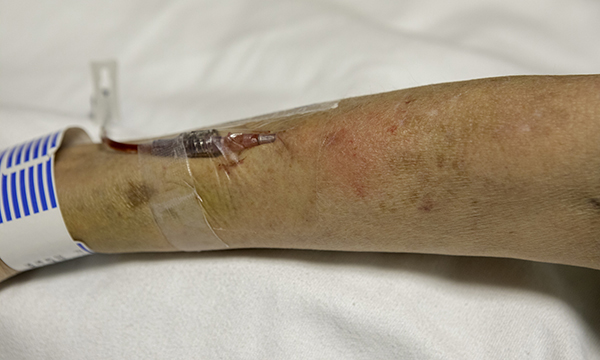
Managing the risk of phlebitis arising from the use of peripheral vascular access devices
To enhance your knowledge of the causes of, and risk factors for, peripheral catheter-related phlebitis
To better understand how to reduce the risk of phlebitis in patients with a peripheral vascular access device
To contribute towards revalidation as part of your 35 hours of CPD (UK readers)
To contribute towards your professional development and local registration renewal requirements (non-UK readers)
Peripheral vascular access devices (PVADs) are widely used in healthcare for short-term intravenous administration of fluids, medicines and blood products. However, the use of PVADs often leads to complications, notably an inflammation of the vein wall known as phlebitis. This article explores the causes and types of phlebitis and outlines the many risk factors for it, notably inadequate gauge size, long dwell time and potentially harmful infusate characteristics. The author reviews evidence-based strategies for preventing PVAD-related phlebitis and emphasises the need for standardised care protocols and ongoing staff training to support safer PVAD use and reduce the risk of phlebitis.